
Simulation Practice Compared With Video Lessons
Before choosing a first injector course, a clinician should know how the course teaches the hands-on part. This guide compares simulation practice with video lessons, using one published study as the reference point.
What to settle before you compare
Write down what the course would have you do with your own hands before a supervised treatment. Then mark each item as practised or only watched. If the product itself is unfamiliar, start with Wikipedia's entry on botulinum toxin. Clinicians in Summit, New Jersey who are comparing courses can put the same two questions to each of them.
What the study reports
PubMed Central carries a paper that addresses the question directly. It states: One study finds simulation-based training has shown to be effective and demonstrates trainees who underwent hands-on simulation training for botulinum toxin injections have significantly higher practical tests scores compared to those who receive video training only.
Take the comparison as it is written. The two groups are hands-on simulation and video training only. The measure is practical test scores.
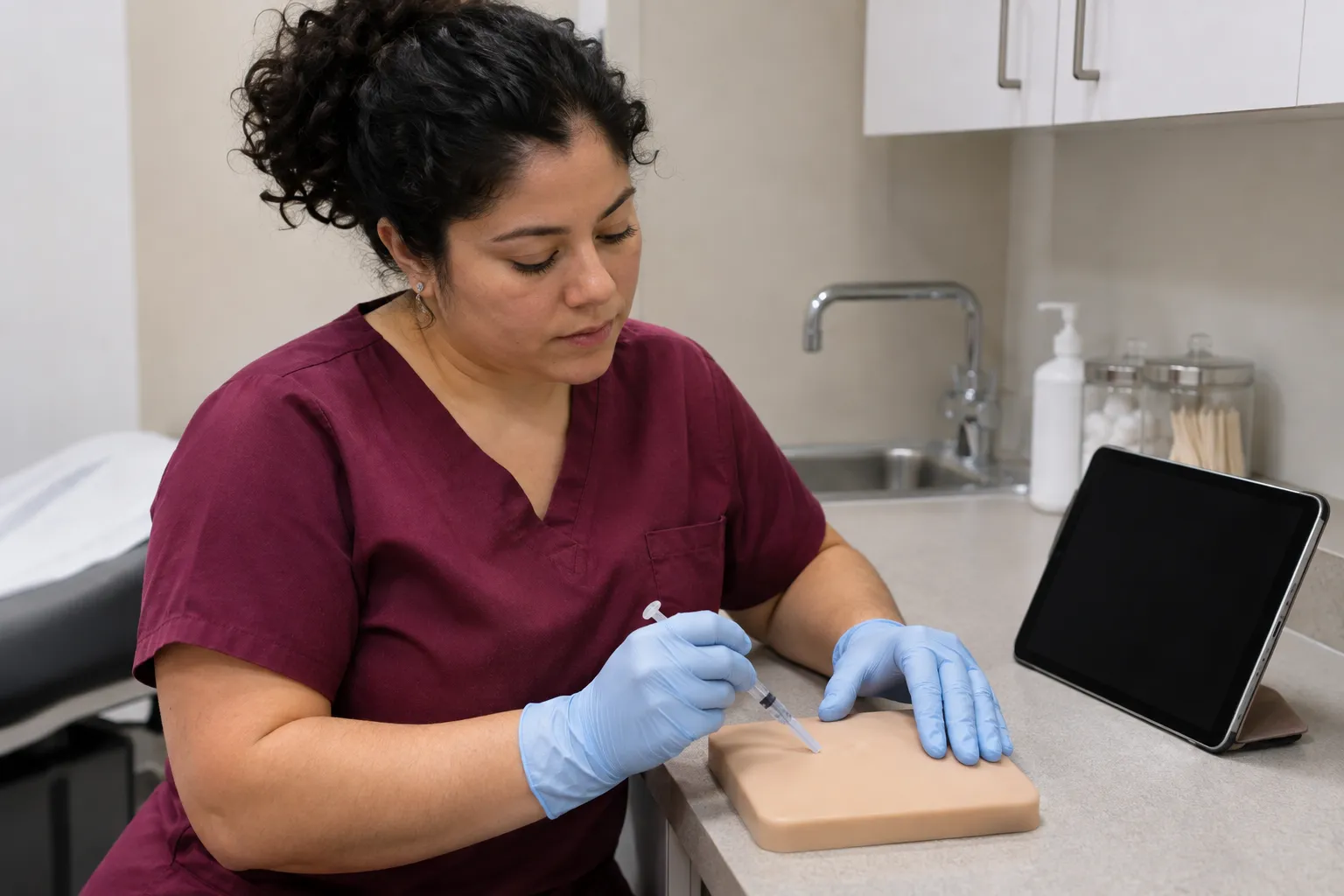
Reading your course against the two groups
Video-only is the second group in that comparison. A course that mixes video lessons with practice sits between the two, so ask which of its skills fall into which group. Ask for the answer skill by skill rather than for a general description.
What practitioners publish
Practitioner groups also write about this stage of learning. For a second view beside the study, read the Plastic Surgery Practice article AAAMS Launches Mentorship Program to Support Early-Career Aesthetic Injectors.
Simulation, video or both, skill by skill
This step is done when you can say, for each skill the course lists, whether it is taught by simulation, by video, or by both. Keep that answer in writing before you book anything.